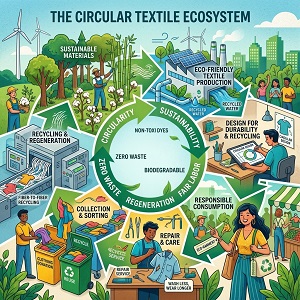

Digital transformation in the textile industry is no longer merely a future ambition; it is now a baseline requirement for survival in 2026. This shift in paradigm was evident at the Texprocess 2026 trade show in Frankfurt this past spring, where the industry moved beyond discourse into implementing integrated workflows across both product development and production processes. Over 1,700 exhibitors showcased cutting-edge technologies, including automation, Artificial Intelligence (AI), intelligent material flow systems, and real-time AI-based quality control to streamline factory operations.
China is making significant strides in national infrastructure development by integrating artificial intelligence (AI) and sustainability principles into its transportation networks. Under its 15th Five-Year Plan (2026-2030), the nation has pledged to develop a modern infrastructure system through a series of ambitious projects designed to bolster regional development and economic circulation.
The global textile trade landscape is entering a highly competitive new chapter. The British Textile Machinery Association (BTMA) has officially announced the launch of a strategic initiative, the UK-India Textile Machinery Coalition. This major move comes as a direct response to the landmark UK-India Free Trade Agreement (FTA) signed in July 2025. The coalition is projected to significantly alter the dynamics of material sourcing, long-term trade, and international competitiveness by integrating cutting-edge manufacturing technology with more efficient supply chains.
Page 2 of 5