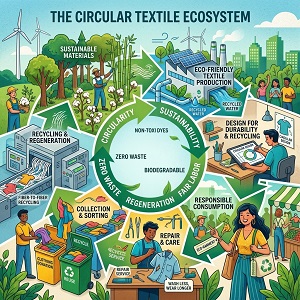

Clothing waste is a rapidly growing global issue, and Australia stands out as one of the highest garment-consuming nations, with a fashion carbon footprint that ranks as the largest among G20 countries. To combat this mounting crisis, researchers at the Royal Melbourne Institute of Technology (RMIT) have developed a sustainable method to transform cotton textile waste into nutrient-rich compost.
The French government has officially initiated a strategic new move, setting a deadline of January 8, 2027, to decide whether to push for textiles to be integrated into the European Union's Carbon Border Adjustment Mechanism (CBAM). This step marks a new chapter in trade debates that has the potential to drastically reshape the global textile supply landscape.
The global fashion industry is beginning to adopt an unconventional strategy by encouraging customers to mend worn clothes instead of continually buying new ones. Amid pressures to reduce environmental pollution and climate change, a number of leading clothing brands are starting to make in-store repair services and sewing workshops a key attraction for young consumers who want to save money while protecting the planet.
Page 1 of 11