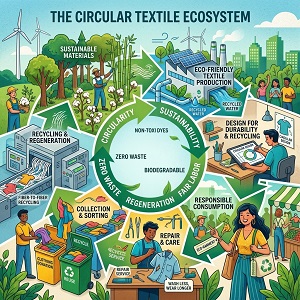

A significant stride toward an environmentally friendly industrial future was recently marked at the Germany-Vietnam Business Forum 2026, held in Ho Chi Minh City. The event, themed 'Circular Economy in Manufacturing,' served as a testament to Germany’s profound commitment to supporting Vietnam's green transition. Through synergies involving technology transfer, knowledge sharing, and long-term business partnerships, both nations now stand at the threshold of a major transformation in the global manufacturing landscape.
Global fashion and consumer goods supply chains are entering a critical regulatory transition as Extended Producer Responsibility (EPR) frameworks for textiles move from policy design to enforceable market requirements. According to the 'Mapping of Global Extended Producer Responsibility (EPR) for Textiles' report by the Global Fashion Agenda, governments across Europe, the Americas, and Asia are rapidly converting voluntary sustainability commitments into binding statutory obligations. This shift treats textile waste not as a municipal burden, but as a producer-level financial liability directly affecting operating margins.
Polyester has long been the crown jewel of the global fashion industry due to its low cost, flexibility, and abundant availability. However, beneath the comfort of these synthetic garments lies a deeply destructive environmental and social impact. The global non-profit organization, Textile Exchange, has just released a comprehensive new Life Cycle Assessment (LCA) study mapping the carbon footprint and systemic impacts of polyester fiber production, covering both virgin and recycled materials. For the first time, this study opens public data on the environmental impacts of virgin polyethylene terephthalate (PET) production in Southeast Asia—a region that supplies over half of the world's virgin PET needs—while employing an "LCA+" approach that boldly highlights human rights violations throughout its supply chain.
Page 5 of 11