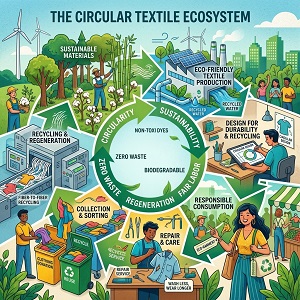

The global fashion industry stands at a critical crossroads. As mountains of textile waste continue to grow, the concept of textile-to-textile recycling has emerged as the "Holy Grail" of circularity. However, transforming an old T-shirt back into a new T-shirt on a global scale requires more than just innovative machinery; it demands a radical systemic overhaul and unprecedented collaboration between rival brands.
Europe’s fashion titans are executing a radical paradigm shift, moving beyond sustainability rhetoric toward the construction of hard industrial infrastructure. Through an ambitious initiative known as Project FAE (Feedstock Activation Europe), global apparel majors like adidas, Inditex, and Bestseller are no longer treating circularity as a branding exercise. Instead, it has become a critical strategy for margin defense. This consortium, backed by over 40 ecosystem players, aims to build the "missing link" in the circular economy: turning mountains of textile waste into spec-compliant, industrial-grade raw materials.
Europe is currently in a race against time to manage a rapidly growing textile waste crisis. Amid the dominance of fast fashion trends, a new report by the Boston Consulting Group (BCG) and the ReHubs initiative delivers a stark warning: achieving a circular textile economy will require a massive investment of up to 11 billion euros by 2035. Without this significant capital injection, the dream of transforming discarded clothing into new fibers will remain out of reach.
Page 7 of 11