
The global fashion market once operated on lengthy lead times, with distinct seasons dictating what appeared in stores and print media spotlighting the creative side of design. Today, however, everything happens simultaneously. Real seasons have practically vanished, social media cycles move at lightning speed, and doomscrolling consumers cycle through multiple trends in rapid succession. In this environment, speed to market is essential, yet supply chain disruptions are ongoing and inventory visibility remains a critical necessity.
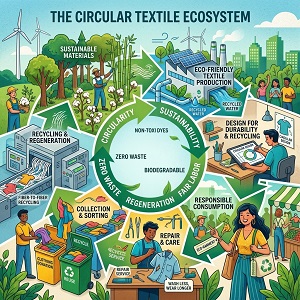
For much of the last decade, switching to recycled polyester (rPET) was a straightforward win for global brands looking to burnish their sustainability credentials. Replacing virgin polyester with yarn derived from discarded plastic bottles was a simple way to reduce reliance on fossil fuels. However, this narrative is undergoing a seismic shift. As governments tighten regulations and consumers demand greater accountability, the recycled polyester industry is evolving; success no longer relies solely on manufacturing capacity, but increasingly on the ability to verify, track, and document every stage of a product's journey through robust data.
The global spinning machinery industry is on the cusp of a major transformation, with the market projected to reach a valuation of US$ 8.3 billion by 2033. This fundamental shift is rooted in the adoption of Industry 4.0 standards, where textile manufacturers worldwide are prioritizing the integration of Internet of Things (IoT) technologies and artificial intelligence to optimize fiber-to-yarn production. This strategic move is a direct response to the urgent need for production facilities to mitigate rising labor costs while simultaneously enhancing output consistency.
Page 1 of 5