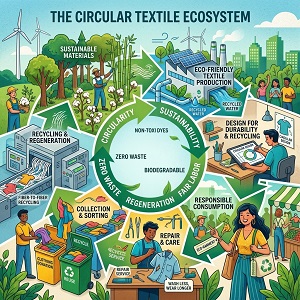

The global fashion industry is witnessing a seismic shift as sustainability moves from a niche concept to a dominant market force. Recycled fashion is no longer sitting on the sidelines; instead, it is accelerating at an unprecedented pace. Recent data from UK-based supplier A.M. Custom Clothing reveals a staggering 76 percent year-on-year increase in garments produced from recycled materials. However, despite this rapid growth, the industry’s long-standing love affair with cotton remains unshaken, with organic cotton volumes still tracking seven times higher than recycled alternatives.
As the global fashion industry faces mounting pressure to abandon the linear "take-make-waste" model, a strategic new intervention is offering a lifeline to the next generation of eco-innovators. Global Fashion Agenda (GFA) and payments giant Visa have launched ‘Visa Young Creators: Recycle the Runway,’ a partnership designed to scale circular business models across Europe. By providing a total prize pool of €110,000 alongside high-level mentorship, the initiative aims to bridge the gap between creative upcycling projects and commercial viability within the $1.7 trillion global apparel market.
The global textile, footwear, and apparel industry entered a transformative new chapter in chemical management with the official release of the Restricted Substances List (RSL) Version 11 by the AFIRM Group on February 18, 2026. As a premier global consortium comprising industry titans such as Adidas, Nike, and H&M, the launch of this latest document is far more than a routine update; it represents a decisive response to increasing consumer demands for transparency and the tightening of environmental regulations in international markets. This document serves as a crucial technical roadmap for thousands of factories and suppliers worldwide, including those in Indonesia, ensuring that every fiber and footwear component produced is free from hazardous chemical contaminants that threaten human health and global ecosystems.
Page 9 of 11